
As an Amazon Associate, I earn from qualifying purchases.
Follow this step-by-step tutorial to learn how simple canning peas can be. Having canned peas on hand means your favorite soups, stews, and side dishes can be ready in a flash.
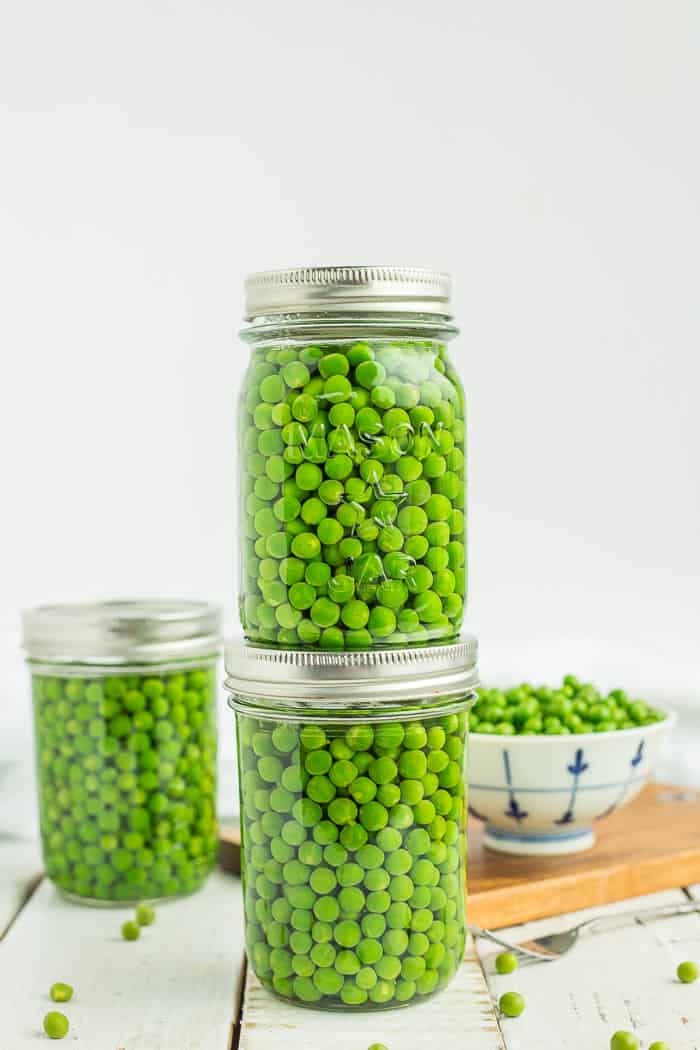
Home-canned peas are so much better than what you can find in the grocery stores. They taste better and fresher, and are also among the easiest vegetables to pop into a pressure canner to stock your pantry.
Don’t be intimidated. You can do this, and I’ll help.
Can You Can Peas Without a Pressure Canner?
Sadly, no. And, I have to reinforce this point: you cannot safely can peas in a water bath canner. Peas, like all low-acid vegetables, must be preserved using a pressure canner.
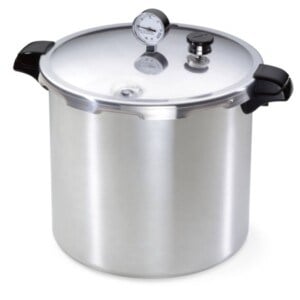
This is the pressure canner I have had for over a decade, and I love it.
HOW TO CAN PEAS
*I’ll walk you through it here with photos, and a detailed and printable recipe card is available at the bottom of this post.
Wash and clean your jars. It is no longer necessary to sterilize jars before canning (hurray!), but you should make sure they are preheated enough to not crack when placed in hot water.
You can put them in a clean dishwasher and run them through a quick wash cycle, or place them in a large pan with some water in a low-heat oven (my lowest temp is 170˚F) until you need them. I’ve even just put hot tap water in them before and left them on the counter.
Wash your lids with hot, soapy water and place them in a clean bowl for now.
Choose young and tender peas, discarding any that look shriveled or spoiled. <— as in they don’t look fresh. Not that they demand a new car for their 16th birthday.
Overall, you’ll need about 4.5 pounds of peas per quart jar. For seven quarts, you’ll need about 31.5 pounds. For nine pints, you’ll need 20 pounds. A US bushel is 30 pounds and will net you 5-10 quarts. (source)
Add 3 quarts of water to your pressure canner and put it on a burner set to high. Make sure there is a canning rack in the bottom of the canner.
Raw Pack: Add peas to the jars, and carefully ladle in boiling water, leaving 1 inch of headspace at the top of the jars.
Hot pack: cook peas in boiling water for 2 minutes. Strain, then add peas to jars and carefully ladle in clean boiling water, leaving 1-inch of headspace. Headspace is defined as the space between the top of the food and the top of the jar.
Using a long utensil (I prefer a plastic chopstick), remove all the air bubbles from the jar. Clean the rim of the jar very well with a hot damp rag. Any food debris left on the rim may impact the seal of the lid in the canner.
Place a clean and new lid on the jar. Add a ring, and tighten to fingertip tight.
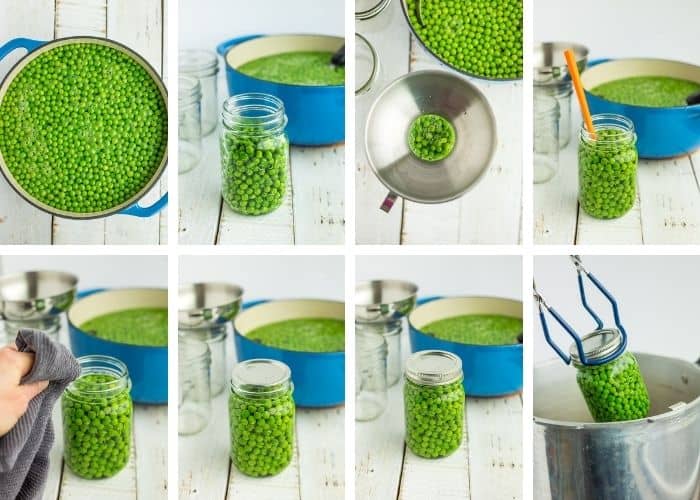
Using canning tongs, gently place the jars in the canner. Lock the lid. Soon, steam will start coming through the vent pipe (I call it the steam chimney). Allow the steam to pass through for about 10 minutes. Then put the pressure regulator (I call it the chimney cap) on top.
Pretty soon, the air vent will pop up. That is a sign that you’re starting to build pressure inside the canner (get excited. This is happening!).
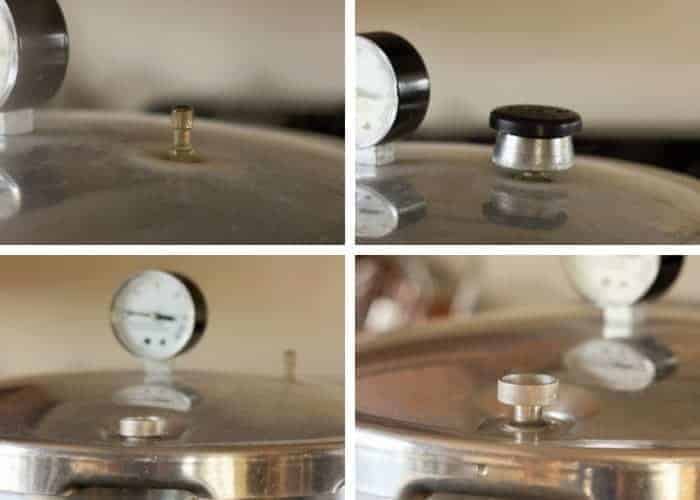
Processing times will vary based on altitude. See the chart below.
Pressure Canning Peas in a Dial-Gauge Pressure Canner
| Canner Pressure (PSI) at Altitudes of | ||||||
| Style of Pack | Jar Size | Processing Time | 0-2,000 ft | 2,001-4,000 ft | 4,001-6,000 ft | 6,001-8,000 ft |
| Hot & Raw | Pints & Quarts | 40 min | 11 lbs | 12 lbs | 13 lbs | 14 lbs |
| *Source: National Center For Home Food Preservation | ||||||
Processing Time for Peas in a Weighted-Gauge Pressure Canner
| Canner Pressure (PSI) at Altitudes of: | ||||
| Style of Pack | Jar Size | Processing Time | 0-1,000 ft | Above 1,001 ft |
| Hot & Raw | Pints & Quarts | 40 min | 10 lb | 15 lb |
| *Source: National Center For Home Food Preservation | ||||
When the dial gauge reaches 11 pounds of pressure, reduce the burner temp to medium and start your timer. The pressure must stay at 11 or (a little bit) above for the duration of the cooking time. You’ll likely need to adjust the temp on the burner a few times depending on your stove.
When the time is up, remove the canner from the burner and allow it to sit until you hear a distinctive “click” of the air vent dropping. Remove the pressure regulator and carefully remove the lid (Pro tip: I always use oven mitts when I take the lid off because the steam is super hot).
Let the jars sit for 5 minutes in the canner and then carefully lift them out with canning tongs. Pro tip: allowing the jars to sit in the canner with the lid off can help reduce the siphoning of liquid in your jars. Siphoning is when liquid seeps out from under the lids and reduces the overall amount of liquid in the jar.
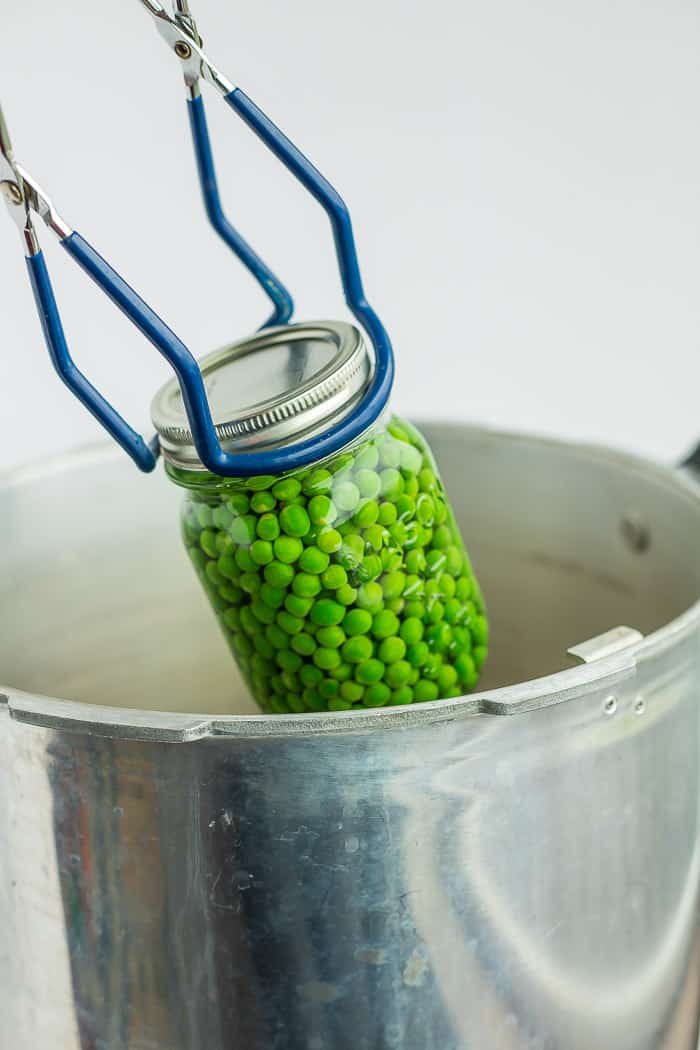
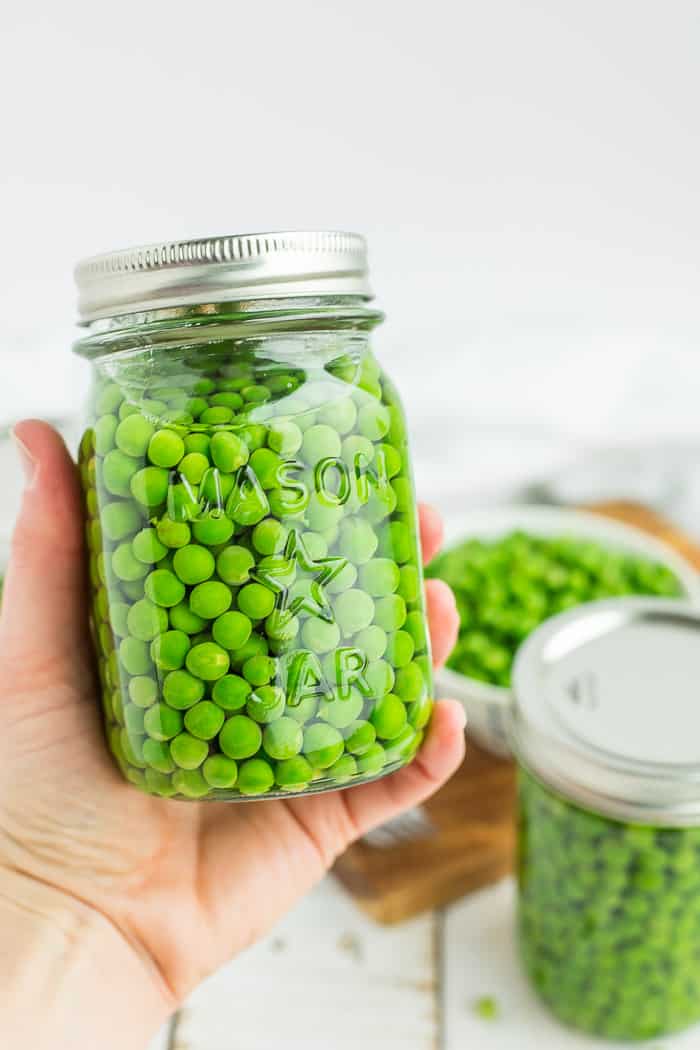
Place hot jars on a towel where they can sit undisturbed for 12 hours.
After a few hours, to check for sealing, gently press down in the middle of the lid. If the lid has no give, it’s sealed. If you can press the lid in and it pops a bit, your jars are not sealed.
PRO TIPS/RECIPES NOTES
- You can add salt to each jar prior to canning it. Use pickling salt and add 1 tsp per quart. Personally, I find the unsalted version easier to use in recipes because it allows me to control the overall sodium.
- Pressure canners can often leave white lines on lids and rings. It’s totally normal and safe. To prevent this, add 1/3 cup of white vinegar to the canner before processing.
- Once the jars have sealed, remove the rings. Label and store sealed jars in a cool (best results are 50-70˚F) dark place for up to 12-18 months.

Get my Canning e-book!
It’s 51 pages of every helpful tip and trick you could want as a brand new canner, AND it includes 13 ad-free canning recipes that are designed to take you from novice to pro.
Canning Peas
Ingredients
- 20 lbs green peas {for 9 pints}
- water
- 9 tsp canning salt {optional}
Instructions
- Wash and clean your jars. Fill with hot water or keep them warm in a clean dishwasher or oven.
- Wash your lids with hot soapy water and place them in a clean bowl.
- Choose young and tender peas, discarding any that look shriveled or spoiled.
- Add 3 quarts of water to your pressure canner and put it on a burner set to high. Make sure there is a canning rack in the bottom of the canner.
- Raw Pack: Add peas to the jars, carefully ladle in boiling water, leaving 1-inch of headspace at the top of the jars.20 lbs green peas, water
- Hot pack: cook peas in boiling water for 2 minutes. Strain, then add peas to jars and carefully ladle in fresh boiling water, leaving 1-inch of headspace.
- {optional}: add 1 tsp of salt per quart or 1/2 tsp salt per pint.9 tsp canning salt
- Use a long utensil (I prefer a plastic chopstick), to remove all the air bubbles from the jar.
- Clean the rim of the jar very well with a hot damp rag.
- Place a new and clean lid on the jar. Add a ring, and tighten to fingertip tight.
- Using canning tongs, gently place the jars in the canner.
- Lock the lid. Soon, steam will start coming through the vent pipe.
- Allow the steam to pass through for about 10 minutes. Then put the pressure regulator on top.
- Pretty soon, the air vent will pop up.
- In a dial-gauge pressure canner, process pints and quarts based on the elevation guide below (see processing chart in post for additional altitude adjustments):*0-2,000f ft {PSI: 11 lbs of pressure} = Pints 40 min, Quarts 40 min*2,001-4,000k ft {PSI: 12 lbs of pressure} = Pints 40 min, Quarts 40 min*4,001-6,000k ft {PSI 13 lbs of pressure} = Pints 40 min, Quarts 40 min*6,001-8,000k {PSI 14 lbs of pressure} = Pints 40 min, Quarts 40 min
- When the dial gauge reaches the appropriate PSI, reduce the burner temp to medium, and start your timer. The pressure must stay at the PSI or (a little bit) above for the duration of the cooking time.
- When the time is up, remove the canner from the burner and allow it to sit until you hear a distinctive “click” of the air vent dropping. Remove the pressure regulator and carefully remove the lid of the canner (Pro tip: use oven mitts to take the lid off because the steam is super hot).
- Let the jars sit for 5 minutes in the canner and then lift them out with canning tongs.
- Place on a thick clean towel undisturbed for 12 hours.
- After a few hours, to check for sealing, gently press down in the middle of the lid. If the lid has no give, it’s sealed. If you can press the lid in and it pops a bit, your jars are not sealed.
Notes
- Store in a cool dark place for 12-18 months.
- For seven quarts, you’ll need about 31.5 pounds. For nine pints, you’ll need 20 pounds. A US bushel is 30 pounds and will net you 5-10 quarts.







Hi Sarah. I used this method above to can some Zipper Cream peas. We shelled the peas the same day that I canned them, so I used the raw pack method outlined here. I processed them last night, and after removing them from the pressure canner, everything looked as expected. However, when I got up this morning, I noticed they had absorbed all the water in the jar. Is this normal for peas (I’m new to canning)? If not, can I remove the lids, add more water, and reprocess?
Hi Kayla, I’ve never experienced that before. Is it possible to send me a photo so that I can see how much water has been absorbed and what it looks like? [email protected] or you can DM me on Instagram @sustainablecooks